English
 français
 Deutsch
 русский
 español
 português
 العربية
 Melayu
 ไทย
 Indonesia
 हिंदी



Aluminum wins on durability and modern aesthetics. uPVC wins on budget and insulation. That is the short answer to the aluminum vs. upvc bi-fold doors question.
Bifold doors are a big purchase. The material you choose shapes cost, comfort, and looks for years. Aluminium frames stay strong and slim. uPVC panels cost less upfront and hold heat well.
This guide compares both materials factor by factor. You can then match the right option to your home, your climate, and your budget. Aluminum bi-fold doors suit many modern homes, yet uPVC deserves a fair look too.
Aluminum bi-fold doors offer superior strength, slim frames, and a long lifespan of up to 45 years.
uPVC bi-fold doors provide budget-friendly insulation and low maintenance for mild climates.
Consider your climate: aluminum resists wind and salt spray, while uPVC suits sheltered areas.
Compare quotes on equal terms—same glass, size, and hardware—to make a fair value judgment.
Choose aluminum for modern style and durability; choose uPVC for upfront savings and easy care.
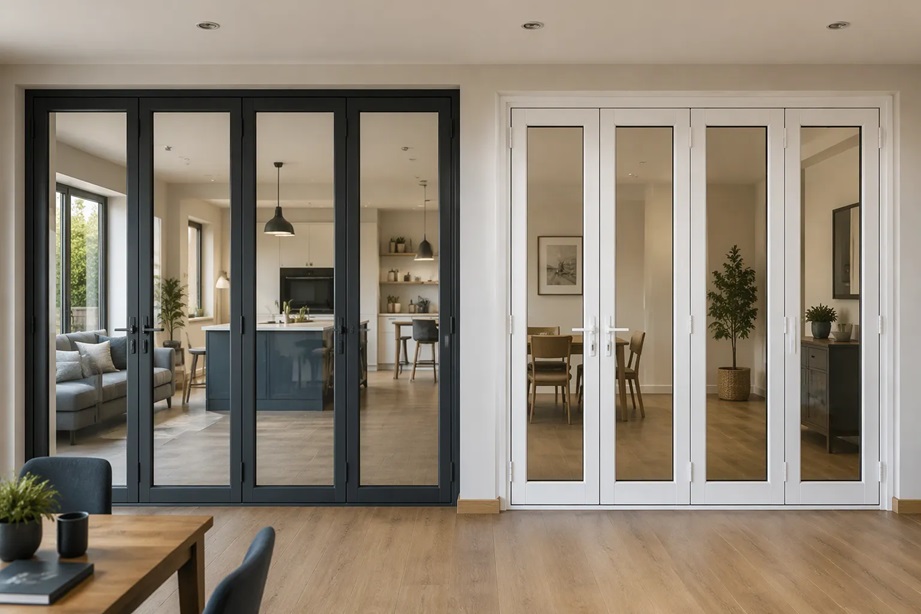
The table below sums up the aluminum vs. upvc bi-fold doors debate in one view.
|
Factor |
Aluminum |
uPVC |
|---|---|---|
|
Strength |
High; holds large panels |
Moderate; less rigid |
|
Frame profile |
Slim, narrow sightlines |
Wider, chunkier |
|
Upfront cost |
Higher |
Lower |
|
Insulation |
Good with thermal breaks |
Strong for the price |
|
Lifespan |
Up to 45 years |
Shorter service life |
|
Look |
Modern, premium |
Traditional, practical |
Aluminium gives you strength, slim frames, and a long service life. uPVC gives you a lower upfront price and strong insulation. Neither option wins every row. Your home and your priorities decide the winner.
The frame material drives four things you will live with every day: cost, comfort, security, and appearance. Understanding this bifold material comparison helps you spend wisely.
Cost starts with the raw material and the manufacturing process. Aluminum costs more to produce and finish. That higher price buys density, rigidity, and a longer lifespan. uPVC costs less to make, so the savings reach you at the till.
Comfort comes down to how each frame handles heat. uPVC conducts very little heat, so it holds warmth indoors on cold days. Aluminum conducts heat readily, yet modern systems add thermal breaks to interrupt that path. The material sets the starting point. The design decides the final result.
Security depends on frame stiffness. A stiff frame holds locking hardware firmly in place. Aluminum offers high rigidity, so it supports robust multi-point locks and large glazed panels without flexing. Quality uPVC systems with multi-point locks also perform well when you specify them properly.
Appearance shapes your home's character. Aluminum extrusion lets makers form slim, precise profiles with narrow sightlines. That is why aluminium bifold doors suit contemporary designs so well. uPVC profiles run wider and read as more traditional.
One more point deserves attention. The quality of the aluminium extrusion folding door profile often matters more than the badge on the showroom door. A skilled folding door aluminum profile manufacturer controls wall thickness, tolerances, and finish quality. Those details decide how the door feels, seals, and lasts. Ask about the profile source before you compare quotes. The same logic applies to uPVC and aluminium alike: good materials for bifold doors come from good factories.
In short, the frame is not a cosmetic shell. It carries the glass, holds the locks, blocks the weather, and sets the style. Treat the choice between aluminium vs upvc as a structural decision, not a color swatch.
Aluminum costs more upfront than uPVC. Premium aluminum systems sit at the top of the range, and the price reflects tighter tolerances, better finishes, and thicker profiles. uPVC is the budget-friendly pick. A standard uPVC bifold door typically costs less than a comparable aluminum unit, so it appeals to homeowners working with a fixed budget.
Timber sits at the high end of the cost scale. If you weigh aluminium vs upvc vs timber, expect timber to cost the most and to demand the most upkeep. That makes an external bifold door cost comparison tricky, because the sticker price tells only part of the story.
Look past the quote and think about the years ahead. Aluminum's higher price buys strength, a longer lifespan of up to 45 years, and sharper style. That combination makes it a stronger long-term investment for many homes. You pay more once, then live with the result for decades.
The aluminum vs vinyl bi-fold doors debate changes when you count replacement cycles. Vinyl bi-fold doors cost less to buy, yet they may need replacing sooner. Spread the price across the full service life, and the gap between aluminum and vinyl often narrows.
Here is a practical way to decide. Set your budget first, then compare quotes on equal terms: same glass, same size, same hardware. Ask each supplier for the expected service life in writing. That single number turns a simple price check into a true value comparison. Homeowners who plan to stay put for many years usually find aluminium bifold doors worth the extra outlay. Buyers who plan to move soon may prefer the lower entry price of upvc bifold doors.
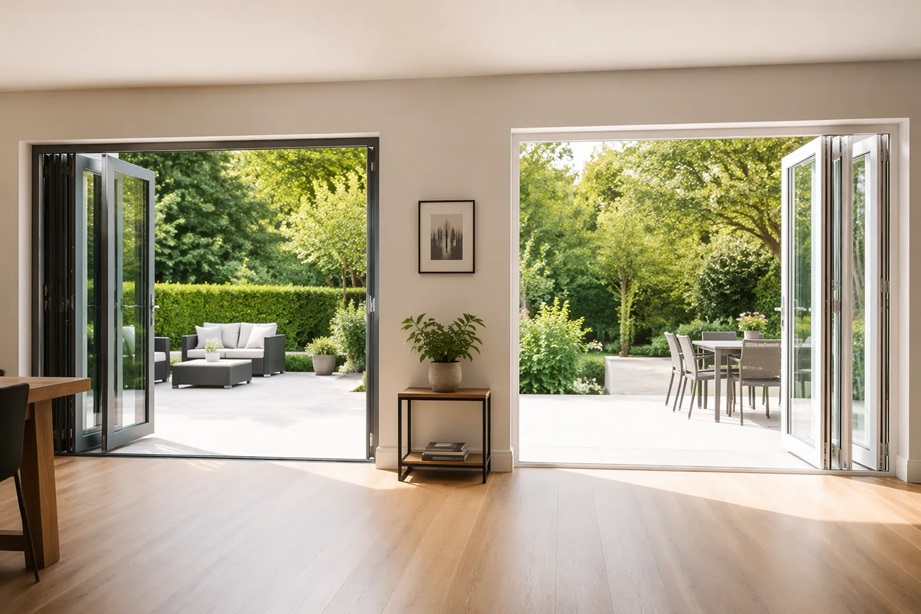
Aluminum handles the outdoors with ease. Sun, rain, and wind barely affect the metal. It does not swell, crack, or warp when the weather turns. That resilience explains why external aluminium bifold doors hold up so well on exposed sites. You can expect a quality aluminum frame to last up to 45 years with normal care.
Warranty terms tell a similar story. Aluminum warranties run roughly 50% longer than uPVC warranties. Manufacturers back what they build, and the coverage reflects confidence in the material.
uPVC performs well in most conditions. Vinyl bi-fold doors resist moisture and rot, and they suit sheltered spots. The material is less rigid than aluminum, though. Strong gusts and wide panels put more stress on a flexible frame.
Strength separates the two materials most clearly. Aluminum holds its shape under load, so wide openings and tall panels stay stable. That stiffness keeps seals tight and locks aligned over the years. Each aluminium bifold door panel also stays light, which eases the load on tracks and hinges. Homeowners who compare aluminum and vinyl often notice the difference in how solid the door feels.
Color fade is a fair concern for any exterior product. Modern finishes protect aluminum bi-fold doors from fading and chalking. Powder coating bonds to the metal and holds its color. Many vinyl bi-fold doors use surface color that can shift over long sun exposure, especially on darker shades.
Think about your site before you choose. Coastal homes, windy hillsides, and large openings favor aluminium bifold doors. Sheltered gardens and mild climates let upvc bifold doors serve well. Either way, check the finish warranty and the frame thickness. Strong aluminium frames fade slower and flex less than thin ones.
A U-value measures how quickly heat escapes through a material. A lower U-value means better insulation. You will see this number on window and door certificates, and it lets you compare products on equal terms.
A thermal break is a barrier inside the frame. Aluminum conducts heat well, so makers insert a insulating strip to separate the inner and outer faces. This strip slows heat transfer and keeps the inner surface warmer. Modern aluminium frames with thermal breaks now rival many uPVC systems on thermal efficiency.
uPVC offers strong insulation for the investment. The material itself conducts little heat, so a standard upvc bifold doors unit performs well in most homes. Aluminum with thermal breaks closes the gap, and premium systems often match or beat basic uPVC. The energy efficiency of aluminium depends heavily on how well the break is engineered.
Glass choice and frame design often matter more than the material itself. A double- or triple-glazed unit with a low-emissivity coating will outperform a single-glazed panel in any frame. Ask about the glass specification before you compare upvc and aluminium quotes.
Frame design carries equal weight. A well-sealed aluminium extrusion folding door profile with tight tolerances blocks drafts and reduces heat loss. A poorly made frame leaks air regardless of material. This is why the folding door aluminum profile manufacturer matters. A reputable factory controls wall thickness and joint quality, and those details protect thermal efficiency over decades.
Compare vinyl bi-fold doors and aluminium options on the same glass package. You will often find the gap between them shrinks. Vinyl bi-fold doors still suit tight budgets, and upvc bi fold doors remain a sensible pick for mild climates. For colder regions or large openings, specify thermal breaks and quality glazing in either material. The energy efficiency of aluminium then becomes a strength, not a weakness.
Routine care stays simple with either material. You wipe the frames with a soft cloth, warm water, and a mild detergent. Avoid abrasive pads and harsh solvents, because they dull the surface over time. Aluminum frames need little more than this. A quality aluminium extrusion folding door profile carries a factory finish that shrugs off dirt, and the metal does not absorb stains. Clean the tracks and hinges on a regular schedule, since grit wears moving parts faster than weather ever will.
uPVC asks for similar treatment. Wash the frames, rinse them, and dry the joints. Vinyl bi-fold doors resist moisture well, so mold and rot rarely become problems. One caution applies to both materials: keep drainage channels clear. Trapped water stresses any frame, and pooled water finds every weak seal. A few minutes each season protects the whole door.
Damage happens, and the two materials respond differently. Aluminum can be repainted or refinished. A scuffed panel or a faded section takes a fresh coat, and the door looks new again. This flexibility extends the service life and lets you change the color later. A reliable folding door aluminum profile manufacturer supplies profiles that hold paint and powder coating well, so refinishing lasts.
uPVC is typically replaced rather than repaired. Deep scratches and impact cracks stay visible, and paint does not bond to the surface. Small marks you can clean, yet structural damage means a new panel. When you weigh aluminium vs upvc vs timber on maintenance, timber demands the most work, aluminum offers the most renewal options, and upvc bifold doors sit in the middle. Homeowners comparing aluminum and vinyl should factor this difference into the long-term budget. Choose upvc bi fold doors for low fuss, or pick aluminium when you want a frame you can refresh for decades.
A stiff frame makes a door harder to force. Aluminium frames hold their shape under pressure, so locking points stay aligned and engaged. That rigidity lets makers fit robust multi-point locks along the full height of the door. Each handle turn drives bolts into the frame at several points, and the door resists prying far better than a single latch allows. The strength of aluminium also supports larger glazed panels without sagging. Wide panels mean fewer meeting stiles, and fewer weak points for an intruder to target.
Quality upvc bifold doors also deliver solid security when you specify them well. Modern upvc systems use multi-point locks, reinforced frames, and steel cores inside the profile. A well-built unit with these features protects your home effectively. The difference lies in how much load the frame carries. Vinyl bi-fold doors flex more under force, so the hardware does more of the work. Aluminium shares that load with the hardware, and the result feels more solid in daily use.
Start with the lock. Ask for a multi-point system with a minimum of three locking points, and confirm the hardware carries a recognized security rating. Check the cylinder too, because a cheap cylinder undermines an otherwise strong door. Look for anti-bump and anti-pick features, and consider a cylinder that meets a named standard such as TS 007.
Next, inspect the frame itself. A reputable folding door aluminum profile manufacturer controls wall thickness and joint quality, and those details decide how firmly the locks seat. Ask about the aluminium extrusion folding door profile behind the quote. Thin walls and loose joints weaken any lock, whatever the badge says. For upvc, confirm the reinforcement and check that the frame includes a steel or aluminum core.
Finally, think about the glass. Laminated panes hold together when struck, and they slow entry far better than standard glass. Combine laminated glazing with multi-point locks and a rigid frame, and you have a door that resists attack on every front.
Frame width changes how a door reads from inside and out. Aluminum's strength lets makers form narrow profiles, so you see more glass and less metal. Those slim aluminium frames create clean sightlines and a neater, more modern look. Large glazed panels become possible too, which floods a room with daylight and blurs the line between indoors and out. A well-made aluminium extrusion folding door profile keeps its shape even across wide openings, so the panels stay crisp and aligned.
uPVC profiles run wider by nature. The material needs more bulk to carry the same load, so the frame takes up more of the view. That suits traditional homes and budget-focused projects, where a chunkier frame feels familiar and appropriate. Aluminum fits contemporary and premium designs, where thin frames and open views carry the style. Neither look is wrong. Each one simply matches a different kind of home.
Both materials come in a wide range of colors and finishes. You can match a bifold patio door to your window frames, your cladding, or a bold accent you want to repeat. Aluminum takes powder coating and anodizing well, and those finishes hold their color over time. A reliable folding door aluminum profile manufacturer controls the coating process, so the surface stays even and durable.
uPVC typically arrives in white, cream, and woodgrain effects, with a smaller palette than aluminium. That range covers most traditional settings nicely. Homeowners weighing aluminum vs vinyl bi-fold doors often find the finish options tip the decision. If you want a specific shade or a metallic look, aluminium bifold doors offer more room to play. If a classic white or woodgrain suits your home, upvc bifold doors deliver it at a lower price. Either way, compare samples in daylight before you commit. Color looks different on a showroom wall than it does against your own brickwork.
Aluminum is one of the most recyclable building materials you can choose. You can melt it down and reform it again and again without losing quality. The metal keeps its strength through repeated recycling cycles. That means an old aluminium frame can become a new one, and the material never really disappears from the supply chain. Many manufacturers now work recycled content into the aluminium extrusion folding door profile they produce, which lowers the demand for fresh raw material.
uPVC recycling is more limited. The material is harder to separate and reprocess, so fewer facilities accept it. Some upvc products do return to the waste stream as new profiles, yet the routes are narrower than aluminum's. Vinyl bi-fold doors therefore end their life with fewer recovery options. Check with your supplier about take-back schemes before you buy.
The greenest door is often the one you never replace. A long service life spreads the environmental cost of manufacturing across many decades. Aluminium frames can last up to 45 years with normal care, as noted earlier. That single purchase avoids the waste of several replacement cycles. A folding door aluminum profile manufacturer that builds thick walls and tight joints directly extends that lifespan.
Shorter-lived products carry a hidden cost. Each replacement means new material, new transport, and old frames heading for disposal. Choosing upvc with a shorter service life may save money upfront, yet it adds to long-term waste. Weigh the expected lifespan against your plans. A durable frame in either material reduces your footprint, and aluminium frames give you the longest runway of all.
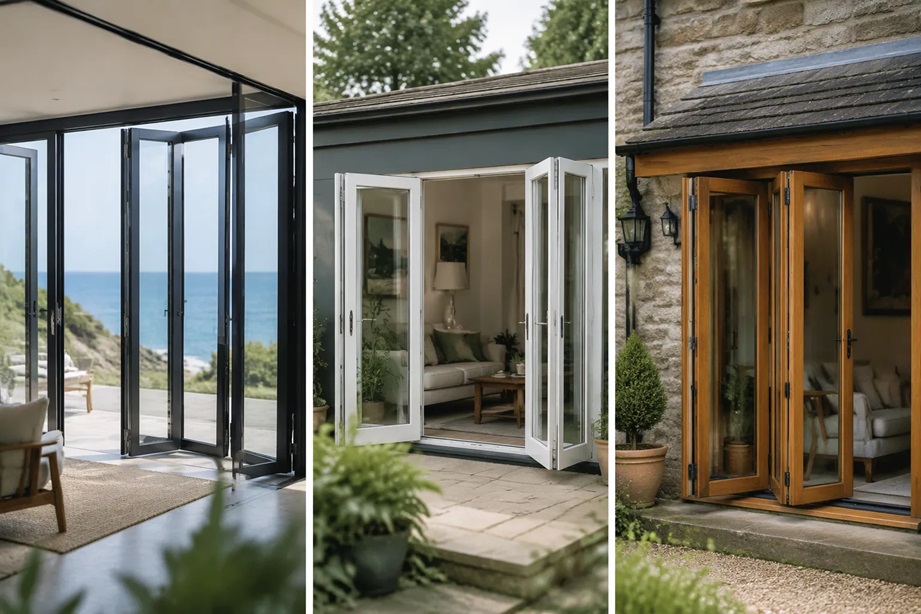
You now know how the materials differ. The next step is matching one to your situation. The aluminium vs upvc vs timber choice comes down to your site, your style, and your budget. No single option suits every home.
Start with your location. Coastal homes and windy hillsides favor aluminium. Salt spray and strong gusts test any frame, and aluminium frames shrug off both. Modern homes also lean toward aluminium bi-fold doors, because slim profiles suit clean lines and open views. A wide opening with tall panels stays stable in a rigid aluminium bifold door.
Tight budgets point to upvc. A standard set of upvc bifold doors costs less than aluminium or timber, and the insulation performs well. Mild climates let upvc do its best work, with little extreme weather to stress the frame. Homeowners who want low fuss and a familiar look often settle here.
Timber suits heritage looks. Period homes and conservation settings welcome the warmth and character of wood. Timber demands more care, though. It needs regular painting or oiling, and it reacts to moisture over time. Budget for that upkeep before you commit.
Weigh all three factors together. Climate sets the durability demand. Style sets the look you want. Budget sets the range you can consider. When you are comparing upvc, timber and aluminium bifolds, score each option against all three.
Here is how the scenarios play out. An exposed coastal site with a contemporary extension favors aluminium bifold patio doors. A sheltered garden room on a fixed budget favors upvc. A listed cottage favors timber, provided you accept the maintenance.
Style carries real weight too. Aluminium or upvc bifold doors both come in several finishes, yet aluminium offers the slimmer sightlines. Timber offers grain and depth that no coating copies. Match the frame to the building, not to a trend.
Budget deserves a long view. Aluminum bi-fold doors cost more upfront, yet the lifespan of up to 45 years spreads that price across decades. A bifold patio door in upvc costs less today. Timber sits at the top of the scale on both price and upkeep.
For homeowners who want strength, slim frames, and modern style, Guang Ya Aluminium offers aluminum bi-fold door options worth a look. A reliable folding door aluminum profile manufacturer controls wall thickness and finish quality, and those details decide how the door performs. Request samples and compare them against your brickwork in daylight. Then choose the material that fits your site, your taste, and your plans. Any of the three can serve you well when you specify it properly.
Aluminum gives you durability, strength, and modern design. uPVC gives you budget-friendly insulation and low maintenance. That is the honest answer to the aluminum vs. upvc bi-fold doors question.
Weigh your climate, your home style, and your long-term plans. Price alone tells only part of the story. A windy coastal site rewards aluminium frames. A sheltered room on a tight budget rewards upvc. Either way, think in decades, not seasons.
Here is a simple recommendation. Choose aluminium when you want slim sightlines and a frame that lasts up to 45 years. Choose upvc when upfront savings matter most. For aluminium options tailored to your project, consult a supplier like Guang Ya Aluminium. Compare samples in daylight, ask about the profile, and buy with confidence.
A quality aluminum frame can last up to 45 years with normal care. Aluminum resists sun, rain, and wind without warping or cracking. Warranties on aluminum typically run about 50% longer than upvc warranties, which reflects manufacturer confidence in the material.
Yes, aluminum costs more upfront, and premium systems sit at the top of the range. That price buys strength, slim frames, and a long service life. Spread across decades of use, the gap between the two materials often narrows. Timber costs the most of all three.
Quality upvc systems with multi-point locks and reinforced frames protect your home well. Ask for at least three locking points and a cylinder with anti-pick features. A rigid frame helps too, so check that the profile includes a steel or aluminum core.
Yes. You can repaint or refinish aluminum frames, and a fresh coat restores the look or changes the color. A reliable folding door aluminum profile manufacturer supplies profiles that hold paint and powder coating well. uPVC usually gets replaced rather than repaired after deep damage.


 شبكة IPv6 مدعومة